Watercolor Woodland Fern PNG Clipart: A Breath of Fresh Air for Your Designs
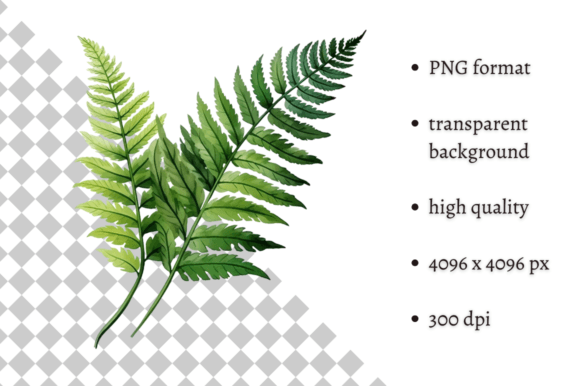
There’s a particular quality to a hand-painted fern. It’s not just the shape, but the way the pigment bleeds softly at the edges, the subtle variations in green, and the feeling of something organic and alive. That’s the essence captured in the Watercolor Woodland Fern PNG Clipart. It’s more than a simple botanical illustration; it’s a piece of digital nature designed to bring a serene, organic touch to your creative work. The transparent background is key here, allowing you to layer this fern over any surface, texture, or color without a clumsy white box interrupting the flow. This single asset, rendered at a crisp 300 dpi and a generous 3584 x 5376 px, is built for serious projects where quality and versatility are non-negotiable.
The Style and Soul of This Woodland Illustration
The personality of this clipart is one of gentle whimsy and natural elegance. It doesn’t scream for attention with hyper-realistic detail. Instead, it whispers with the soft, fluid strokes characteristic of watercolor. You’ll see delicate color washes, perhaps with hints of deeper green or subtle earth tones, and the kind of imperfect, flowing lines that give it a distinctly handmade feel. This style sits comfortably between classic botanical art and modern, approachable illustration. It feels both timeless and fresh, making it a surprisingly flexible component in a designer's toolkit. It’s the kind of asset that can soften a rigid corporate layout, add depth to a minimalist design, or serve as the foundational motif for an entire brand identity.
Where This Fern Truly Comes Alive
The real-world applications for a high-quality element like this are vast. Let’s move beyond the obvious and consider how it can solve specific design challenges.
Elevating Brand Identity and Packaging
For small businesses in the wellness, skincare, artisanal food, or eco-friendly spaces, this fern is a goldmine. Imagine it as a subtle, watermark-like background on a business card, or as the central illustration on a product label for a handmade soap. It communicates values of nature, care, and authenticity instantly. In logo design, it can be used as a standalone mark or integrated with a sans serif font for a clean, modern look that still feels warm. The transparent PNG makes it easy to drop onto packaging mockups, giving you a realistic preview of how it will interact with materials like kraft paper or recycled cardboard.
Transforming Digital and Print Projects
For bloggers and content creators, this asset is perfect for creating cohesive visual themes. Use it to frame pull quotes in a long-form article, as a decorative element in email headers, or as a recurring motif in social media graphics to build brand recognition. The high resolution means it’s equally at home in print. Think wedding invitations with a woodland theme, menu designs for a farm-to-table restaurant, or elegant stationery sets. It can also serve as a beautiful, organic divider in editorial design, separating sections in a magazine or report without the harshness of a simple line.
Enhancing Marketing and User Experience
In marketing materials, visual hierarchy is crucial. A well-placed fern can guide the eye. Use it to point towards a call-to-action button on a website, or to create a visual "pause" between dense blocks of text on a flyer. Its calming nature can also improve the user experience on a landing page, making a form feel less intrusive or a checkout process feel more pleasant. For social media, it’s a fantastic tool for creating Instagram Story backgrounds, Pinterest pin templates, or YouTube thumbnail accents that stand out in a crowded feed.
Practical Guidance for Using Your New Design Asset
Acquiring a great asset is just the first step. Using it effectively is what separates good design from great design.
Evaluating Project Fit: Before you drop this fern into your project, ask yourself: does the overall mood align? This clipart has a gentle, organic personality. It will pair beautifully with handwritten fonts, serif fonts with a classic feel, or clean sans serif fonts. It might clash with ultra-grungy, futuristic, or heavily geometric typography. Consider the color palette of your project. While the fern has its own colors, you can often adjust its hue or saturation in design software to better match your scheme.
Testing Font Pairings: The key to successful font pairing is contrast and harmony. Let the fern be a supporting character, not the lead. If you’re using it with text, ensure the text remains highly readable. A complex script font layered over the fern might be illegible. Instead, try pairing it with a simple, bold display font for a headline, or a neutral body copy font. Always test the combination at the size it will be viewed. What looks elegant on your large monitor might become a muddy blob on a mobile screen.
Understanding Commercial Use: This is critical for entrepreneurs and businesses. The description states it's for "paper and digital crafts," which typically includes commercial projects like selling physical products (prints, cards) or digital products (templates, invitations). However, you cannot resell the raw PNG file itself. It’s meant to be an integrated part of a larger, original design. Always double-check the specific license terms in the shop where you purchased it to be certain.
Leveraging the Format: The transparent PNG format is your best friend. Use it to create layered compositions. Place it behind a photo for a dreamy effect, or in front of a textured background to make it pop. In programs like Canva, Adobe Photoshop, or Illustrator, you can easily resize, rotate, and even duplicate the fern to create a border or a scattered pattern. Because it’s a single, high-res element, you have the flexibility to crop into it, use just a portion, or feature it in its entirety.
Ultimately, this Watercolor Woodland Fern PNG Clipart is a versatile piece of your creative puzzle. It’s a professional-grade design asset that can help you build a more cohesive, engaging, and nature-inspired brand presence across every touchpoint. Think of it not as a decoration, but as a strategic tool for storytelling and visual connection.